
2026-09-27T11:09:03.349Z ·
Why Ceiling Stains in Toronto Condos Spread Between Units
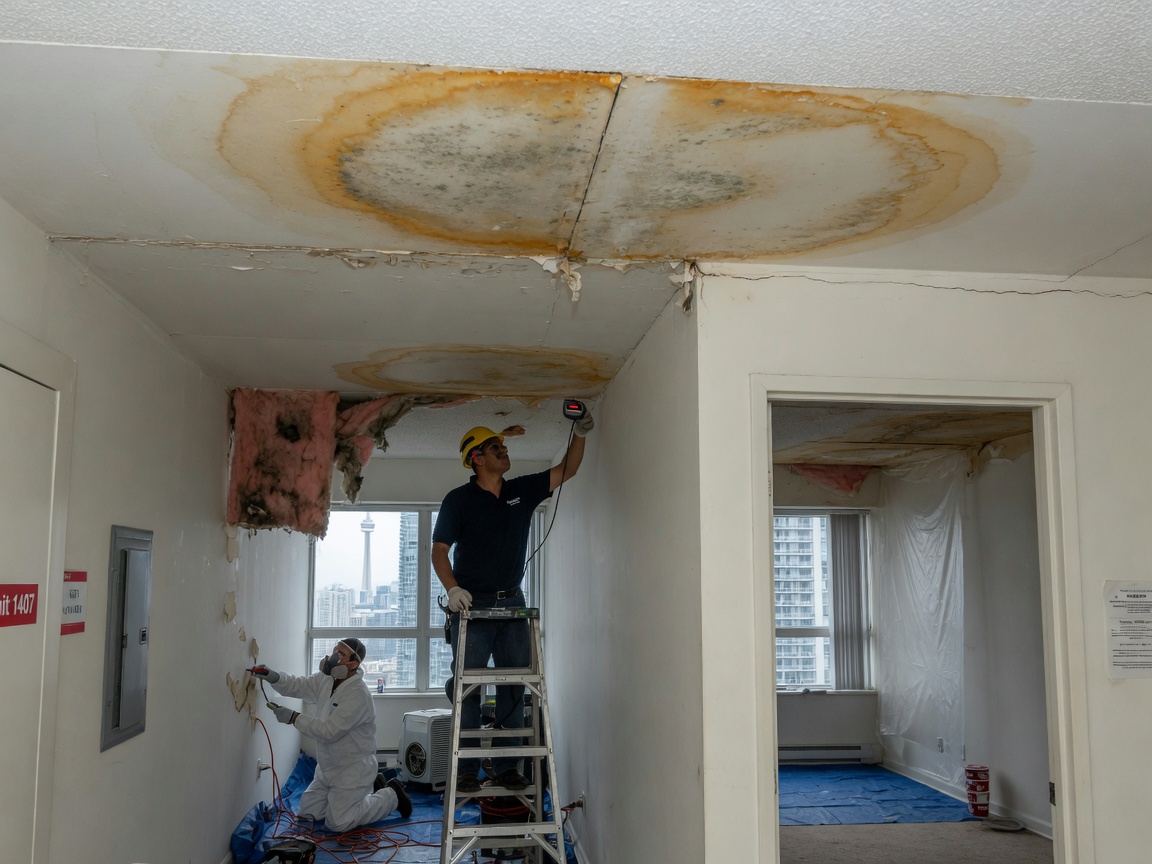
It starts as a small brown ring on the ceiling, maybe near a light fixture or along the wall. A day later it is bigger, and the paint is bubbling. In a condo, that stain rarely began where you see it. Water finds the lowest or easiest path, and in a multi-storey building that path can run a surprisingly long way before it shows itself.
Here is why it spreads. Water leaking from a unit above travels along the upper surface of the concrete slab, through cracks, gaps around pipe sleeves and the small openings where wiring and ducts pass through the floor. It then runs down inside the ceiling cavity and the drywall below, spreading sideways through insulation and framing before the first stain appears. By the time you see it, the wet area is usually larger than the stain.
Common sources are mundane. A burst supply line, a failed washing machine hose, an overflowing bathtub, a leaking dishwasher connection or a cracked toilet fill valve can all do it. Some Toronto condos built in the 1990s and 2000s have Kitec plumbing, a pipe and fitting type that has been known to fail. In other cases, the leak comes from a pipe in the wall, a balcony drain or the building's own risers.
The slow ones are the hardest to catch. A weeping joint behind a bathroom wall can run for weeks before anyone notices, and the slab and drywall stay damp the whole time. Drywall that stays wet starts to sag and soften, paint peels, and the area can develop a musty smell. If you see a stain that keeps changing, or a ceiling that has begun to bow, do not wait to see if it dries out.
If water is actively dripping, put a bucket under it and move furniture and valuables away from the spot. Keep light fixtures in that area off, and avoid using switches nearby if water is running through them. If a ceiling is bulging with trapped water, stay out from under it and call for help instead of poking it yourself. Taking a photo of the active drip is worth the few seconds.
Tell the condo management or property manager right away, even if you think the cause is in your own unit. They can shut off water to a stack, check the unit above and notify the corporation's insurer. Who is responsible depends on where the water came from and what was damaged, and Ontario condo declarations differ, so read yours and ask the condo's insurer if the situation is not clear.
Take photos of the ceiling, the walls and anything the water touched, and note when you first saw it. Wet areas in a condo ceiling often have to be opened up to dry properly. We use a moisture meter and thermal camera to see how far the water has travelled, cut out only the drywall and insulation that needs to go, and dry the cavity with air movers and dehumidifiers.
A stained ceiling is also a sign the structure is carrying more moisture than you can see. Drying what is hidden is what keeps the damage from reaching the next unit down, and from coming back as peeling paint a month later. If you are not sure whether the source is yours or a neighbour's, call us on (226) 639-7972 and we can look at the ceiling together.