
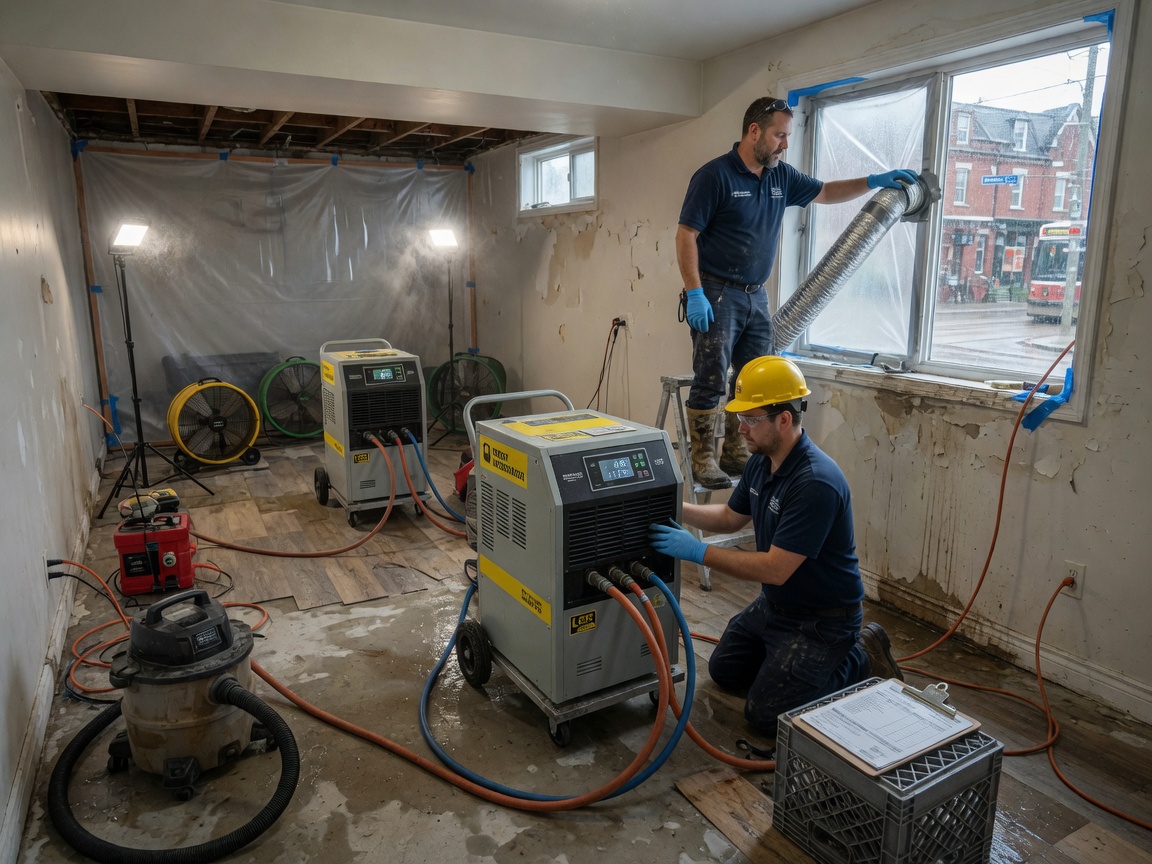
Sometimes the problem is not a flood at all. The basement smells damp after a humid August, the laundry room never quite dries, or a small leak has been fixed and the room still feels heavy. For that kind of problem a dehumidifier rental in Toronto can be the right call. Renting makes sense when no water is standing, when the wet area is small, and when the materials are only slightly damp rather than soaked through.
Renting stops making sense when water has soaked carpet, pad, drywall or insulation, when it came from a sewer or drain (Category 3), when the wet area is bigger than one or two rooms, or when you cannot tell where the moisture is coming from. A machine pulling water from the air cannot pull it out of a soaked wall cavity fast enough, and it cannot tell you which materials are wet. In those cases Water Extraction and Structural Drying, with readings and a plan, are what the building needs.
There are two types of dehumidifier you will be offered. A low-grain refrigerant (LGR) unit works like an air conditioner coil: it chills the air, collects water as it condenses, and reheats the air so it is drier when it leaves. It works well in a warm room and is the standard for most water damage. A desiccant unit uses a rotating wheel of moisture-absorbing material, and it keeps working in cold spaces such as an unheated basement or garage in January, though it uses more power and blows out warm air. We recommend the type from the room temperature and what is wet.
Check your power before the machine arrives. A rental dehumidifier plugs into a normal grounded outlet, but it should have a circuit to itself, away from a space heater or the microwave, because a tripped breaker overnight means the room stops drying. Do not use a long, thin extension cord. Keep the unit out of standing water and clear of walls and furniture so air can flow, and close doors to other rooms so it works on one space at a time. Older Toronto homes often have only a few basement circuits, so it helps to know which outlets share a breaker.
A dehumidifier collects litres of water in a day, and the little bucket will not keep up. Most rentals drain by gravity through a hose to a floor drain, laundry sink or utility tub, or through a built-in pump if the drain is higher than the machine. Make sure the hose slopes down the whole way and has no kinks, since a blocked hose shuts the unit down or leaks onto the floor. In a condo, check with your condo corporation before running a hose across a shared area or into a shared drain.
How long you need it depends on how wet the space is, the temperature and the size of the room, and the honest answer is that readings decide. A damp basement after a minor leak can come down in a few days. Thicker materials such as concrete and wood framing take longer. Judge it by a moisture meter, not just the humidity number on the display, because air can read dry while the walls are still wet. If you want readings taken, say so when you call.
Drop-off and pickup are arranged by phone. We bring the dehumidifier, set it up, show you where it drains and what the display should read, and collect it when you are finished. Tell us about the access (stairs, a buzzer code, parking, a unit on a high floor) and what is wet. Calling first also lets us check whether a rental is enough or the damp is a symptom of something bigger, which saves you paying for a machine that cannot solve the problem.
Rental cost depends on the type and size of the machine, how many units the space needs, how many days you keep them, and whether delivery and set up are needed. A small damp room and a whole basement need different equipment, so the right price depends on what is in front of us. We explain the cost on the phone or on site before anything is delivered. There are no prices on this page because the machine should fit the room, not the other way round.
From our crew: Run the machine in a closed room with the door shut, and empty or check the drain hose on the first day. If the water is coming out steadily, it is working. If nothing comes out after a day, the room is not as wet as you thought, or the hose is blocked.
Treat it as more than a rental if the humidity does not fall, if you see mould, or if the dampness returns after you empty the machine. Toronto summers push indoor humidity up, and basements with stone or block foundations sweat on hot days. A rental can handle that seasonal damp, but a wall that keeps coming back wet usually means a leak or seepage that needs finding, which is where Water Leak Detection comes in. To book a rental or ask if you need one, call (226) 639-7972. We answer 24 hours a day, 7 days a week, across Toronto and the GTA.
Dehumidifier Rental Services We Offer
✓LGR Dehumidifier Rental
Low-grain refrigerant units for warm, damp spaces after a small leak or a humid season.
✓Desiccant Dehumidifier Rental
Wheel-type units for cold basements, garages and crawl spaces where refrigerant units lose output.
✓Delivery, Set Up and Drainage
The machine is placed, plugged in and connected to a hose or pump, with the display explained.
✓Rental Pickup and Readings
We collect the unit when you are done, and can take moisture readings first if you want confirmation.
How it works
- 1
Talk through what is wet
You tell us what happened, how big the area is, what the room feels like and how long it has been damp. We say whether a rental will do or the job needs full drying.
- 2
Choose the machine
We pick LGR or desiccant based on room temperature and moisture, and confirm power and drain access before delivery. We also confirm which outlet and drain you will use.
- 3
Drop-off and set up
We place the unit, connect the drain hose or pump, plug it into a suitable circuit and show you what the readings should do. We also confirm it is level.
- 4
Monitor and pick up
You run it until the materials are dry, not just the air, and can ask us for readings to confirm it. When you are ready, we collect the machine from you.
Pricing
Rental cost depends on the type and number of machines, how many days you keep them, and whether delivery and set up are needed. The price is explained before anything is delivered.