
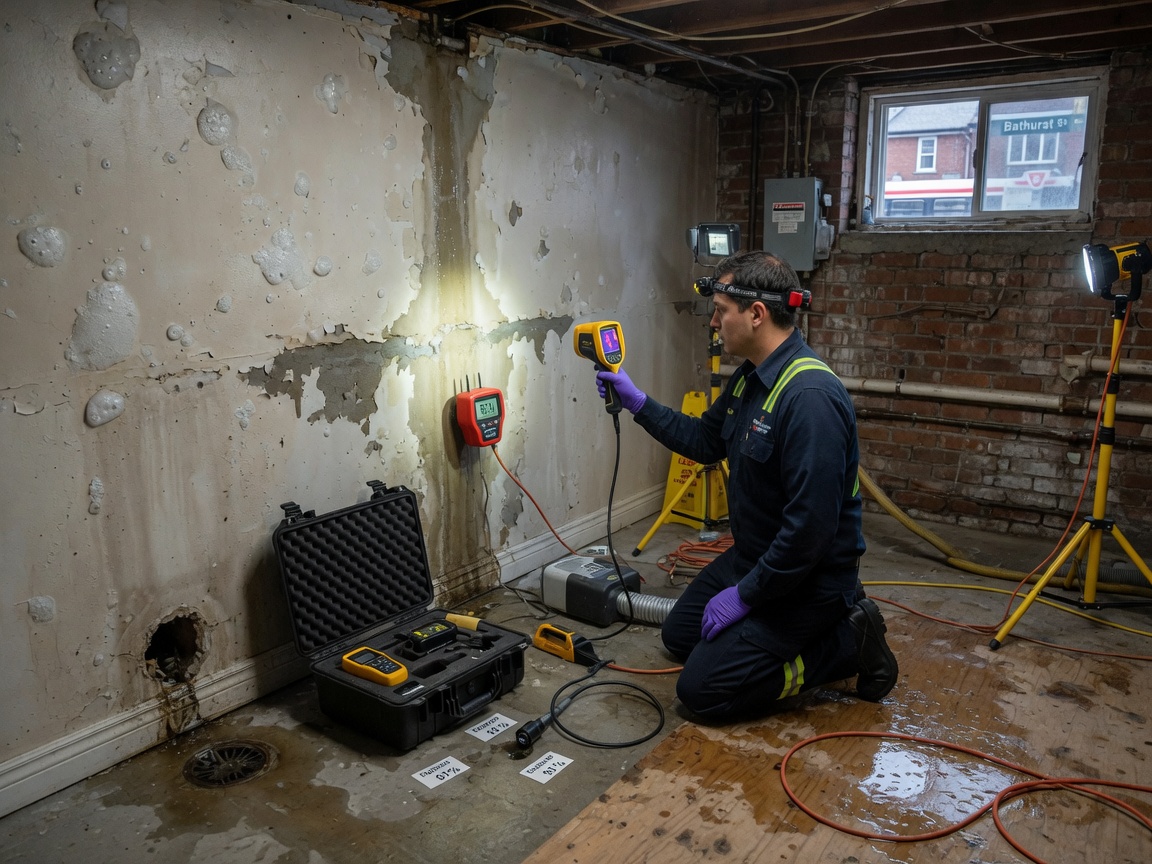
A faint hiss in the wall when every tap is off. A water bill that jumped with no change in how you live. A warm patch on the floor, or a stain that keeps coming back after you painted over it. Hidden leaks give small clues first, and leak detection in Toronto is about reading those clues before the drywall bulges or the floor lifts. What we do is find where the water is and how far it has spread. What we do not do is repair the pipe.
It helps to be clear about where detection starts and stops. We locate moisture, trace it back to the likely area and document it. A plumber repairs the pipe, valve or fixture. If water has soaked materials, we dry them, and if the leak ran long enough to grow mould, you may need a mould specialist after it is found. Keeping those roles separate stops you from paying twice to open the same wall.
If you suspect a hidden leak, start with the main water valve and the meter. Turn off every tap and appliance, then look at the water meter dial and see whether it is still moving. If it is, water is escaping somewhere. Shut the main valve and see if the hiss stops. Note any rooms with warm or damp spots and keep towels and furniture away. If water is near an outlet or the panel, stay clear and switch off power only if the panel is dry and safe to reach.
We work with three main tools. A moisture meter, pin type and pinless, reads moisture content in drywall, wood and floors. A thermal camera shows temperature differences, because evaporating water cools a surface and a hot-water line leak shows as a warm patch. Together they let us sweep walls, floors and ceilings without cutting anything. When the readings point to one spot, we confirm with a small inspection opening, no larger than needed.
Hidden leaks show up in predictable places. Behind a shower wall and tub surround. Under bathroom and kitchen floors. Inside the wall behind a washer. In the cavity above a ceiling below a bathroom. In the supply line to a second-floor bath, and in slab or subfloor where pipes run under concrete or vinyl. The route water takes is rarely a straight line, so the wet spot you notice is often not directly under the leak. We follow the readings back to where the moisture stops getting stronger.
A visit follows an order. We ask when you first noticed the sign and which fixtures were in use. Then we sweep room by room with the moisture meter and thermal camera, comparing wet readings with dry reference spots. We mark the edges of the wet area on a rough floor plan and photograph it. If water is actively spreading, we shut it off or tell you how, and we start Water Extraction and Structural Drying where needed. You get the findings in plain words that you can give your plumber and your home insurer.
Detection costs depend on the size of the home or area to be checked, how many rooms or floors are involved, how hard it is to reach the suspected area, whether a second set of readings is needed, and whether the leak has already damaged materials that need drying or removal. A single bathroom is a quick sweep, while a whole house with a slab floor and several storeys takes longer. We explain the price on site before work starts, and photos and readings are documented for your home insurance claim.
It is urgent when water is actively running, when the ceiling below is wet, when a patch of floor is warm, or when the meter keeps turning with everything off. Toronto has some housing quirks that matter here. Older houses can carry galvanized or old copper supply lines. Condos from the 1990s and 2000s may have Kitec plumbing, a pipe type with a history of fitting failures. And winter brings frozen and burst pipes inside exterior walls that only show themselves when it thaws.
From our crew: Turn everything off and watch the meter dial for a short while before you do anything else. If it creeps, you have a supply leak. If it is still, the water is probably from a drain, a roof or outside, and that changes who you call.
If you live in a condo, tell your condo corporation early, because the water may be coming from a neighbour's unit or a shared line, and the corporation decides who investigates. Once the source is located, the plumber repairs it, and if materials got wet, a Water Damage Assessment or Structural Drying finishes the job. To get a hidden leak traced, call (226) 639-7972. We answer 24 hours a day, 7 days a week, across Toronto, Mississauga, Brampton, Richmond Hill and the rest of our service area.
Water Leak Detection Services We Offer
✓Thermal Camera Moisture Scan
A non-invasive scan of walls, ceilings and floors for temperature patterns that point to wet materials.
✓Moisture Meter Mapping
Pin and pinless readings across the area, mapped so you can see the edges of the wet zone and how far it spread.
✓Hidden Leak Tracing
Following readings back through walls, ceilings and floors to the likeliest source before anyone opens a wall.
✓Leak Documentation for Insurance and Plumber
Photos, readings and a plain written summary you can pass to your plumber, condo corporation or insurer.
How it works
- 1
Listen and shut off
We ask what you noticed and when. If water is running, we help you shut the main valve and check the meter to see if the leak is on the supply line.
- 2
Scan the area
Thermal camera and moisture meter sweeps cover walls, ceilings and floors, compared against dry reference readings from the same house. Each reading is noted against its room.
- 3
Pinpoint and map
We trace readings back to the likeliest source, confirm it with a small opening if needed, and mark the wet zone on a rough plan.
- 4
Report and next steps
You get plain findings, photos and the readings behind them. A plumber repairs the pipe, and we dry or remove any materials that got wet.
Pricing
Cost depends on the size of the area checked, how many rooms or floors are involved, how hard the suspected spot is to reach, and whether damaged materials also need drying. The price is explained on site before work starts.