
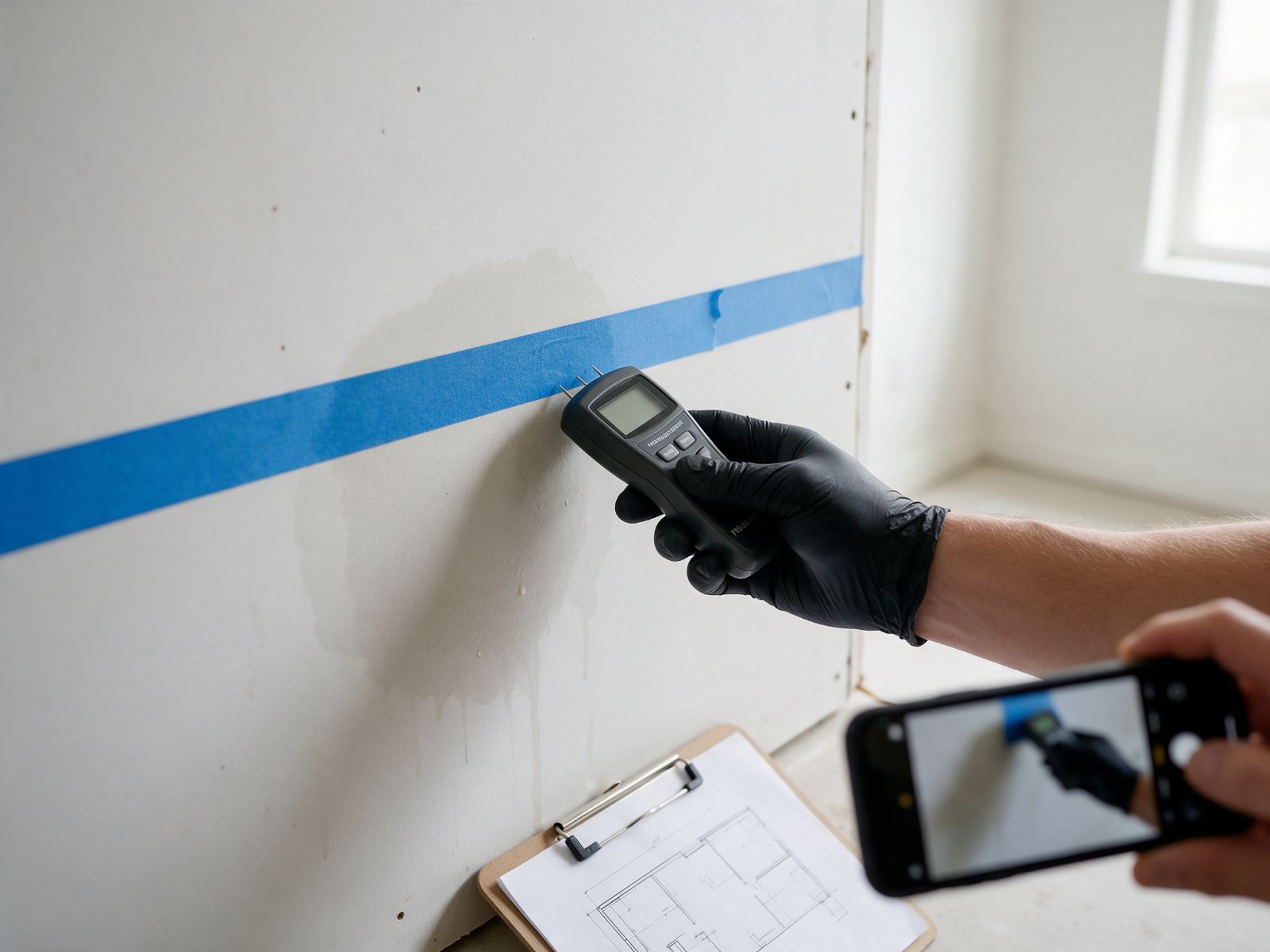
You cannot see most water damage. A wall can feel dry and still hold water in the bottom plate. A ceiling can look fine while the insulation above it is soaked. A basement can smell damp with no visible stain at all. When you are deciding what to rip out, what to keep and what to tell your insurer, guessing is expensive in both directions, which is why a water damage inspection starts with measurement rather than opinion.
If the water is still moving, stop it first. Shut the main water valve, usually near the front wall of the basement where the line enters the house, and stay out of standing water if outlets are close. Do not run fans or heaters over a wall you have not measured, because that can dry the surface and hide wet material behind it. Do not tear anything out before it has been photographed. An assessment is far more useful when the evidence is still where it was.
Moisture mapping is the core of it. With a pin and pinless moisture meter we take readings across floors, walls and ceilings, record them on a sketch of the room, and mark the edge of the wet zone. The pattern shows the story: a tide line low on a wall points to a flood, a spreading ring points to a leak overhead, and a wet corner far from any plumbing points to something in the structure. The numbers show where the water stopped, not where it only looks like it stopped.
The thermal camera adds the picture. Wet materials usually read cooler than dry ones, so it shows damp patches behind paint, under floors and above ceilings without cutting anything open. It does not measure moisture on its own and we do not treat it as proof, but it tells us where to put the meter. We use it to find the edge of the damage, check that drying is working, and catch hidden moisture that a visual look would miss.
Then we write it down. You receive photos and written readings, recorded by room and by material, with the date and the location of each reading, so you can attach them to an insurance claim. We describe what we measured and what we saw, not what the insurer will decide, and we never promise a claim outcome. If we come back to repeat readings after drying has started, those are logged the same way so the claim file shows a clear before and after.
The assessment also sorts the job. Materials that are wet from clean water and caught early can be dried in place. Materials that have soaked long enough, absorbed contaminated water, swelled or lost their structure are removed, and we explain the reasons. Where the problem is outside what we do, such as a leaking pipe that needs a plumber or visible mould that needs a mould specialist, we say so plainly. A drying plan, if one is needed, follows the readings, not a standard package.
Assessments are not only for floods. If you are buying a house or a condo, a moisture check of the basement walls, the ceiling below a bathroom or the area around an old water heater can show past leaks that fresh paint is hiding. If you had a leak that was fixed months ago, we can check whether anything is still wet. This is not a home inspection or an engineering report, but it does give you measured moisture data to take to your own inspector or your agent.
The cost depends on how much of the property has to be measured, the size and layout, how much access we have to walls and ceilings, whether we return to repeat readings, and whether the assessment leads into a drying job. A quick check of one room is a smaller visit than a whole finished basement. We explain the price on site before work starts, and we tell you what the assessment covers so you know what you are getting.
Call promptly after any leak, flood or storm, and do not wait for stains. Moisture inside walls can start a mould problem within days, and the sooner the readings are logged, the clearer the claim. In Toronto, older brick houses with stone or block foundations, clay weeping tile and finished basements are common, and after heavy rain, readings often show moisture low in basement walls that was never visible, even in a house that did not look flooded.
From our crew: Tell us exactly where the water came from and when you first noticed it before we take a single reading. The pattern of moisture only makes sense against the story, and a reading taken the same time each day will tell you whether the wall is drying or just looks it.
To book a water damage assessment anywhere in Toronto or the GTA, call (226) 639-7972. Calls are taken 24 hours a day, 7 days a week, and that includes the night after a storm. If the readings show wet material, our Structural Drying and Water Extraction services pick up from there, with the same photos and readings already on file. Tell us on the phone what happened and when, and what you are trying to decide, and we will say what the visit will cover.
Water Damage Assessment Services We Offer
✓Moisture Mapping
Meter readings recorded on a room sketch so the edge of the wet zone is clear and can be checked again later.
✓Thermal Camera Scan
A scan for cool, wet patches behind paint, under floors and above ceilings without opening them up.
✓Insurance Documentation
Dated photos and written readings by room and material, prepared for your claim.
✓Pre-Purchase and After-Leak Checks
Moisture checks of a property before you buy, or after a past leak, to see whether anything is still wet.
How it works
- 1
Look and listen
We ask what happened, where the water came from and when, then walk the property and photograph the damage and the area around it before taking any readings.
- 2
Measure
Moisture meter readings and a thermal camera scan are taken across floors, walls and ceilings, and each reading is recorded by room, material and date.
- 3
Map the wet zone
We mark the edge of the damage on a sketch of the room and compare readings against dry reference areas, so the result shows clearly where the water stopped.
- 4
Report and advise
You get photos and written readings, and a plain explanation of what can be dried, what must be removed and what needs another trade such as a plumber.
Pricing
Cost depends on how much of the property is measured, the layout and access, whether readings are repeated and whether the visit leads to drying work. The price is explained on site before work starts.