
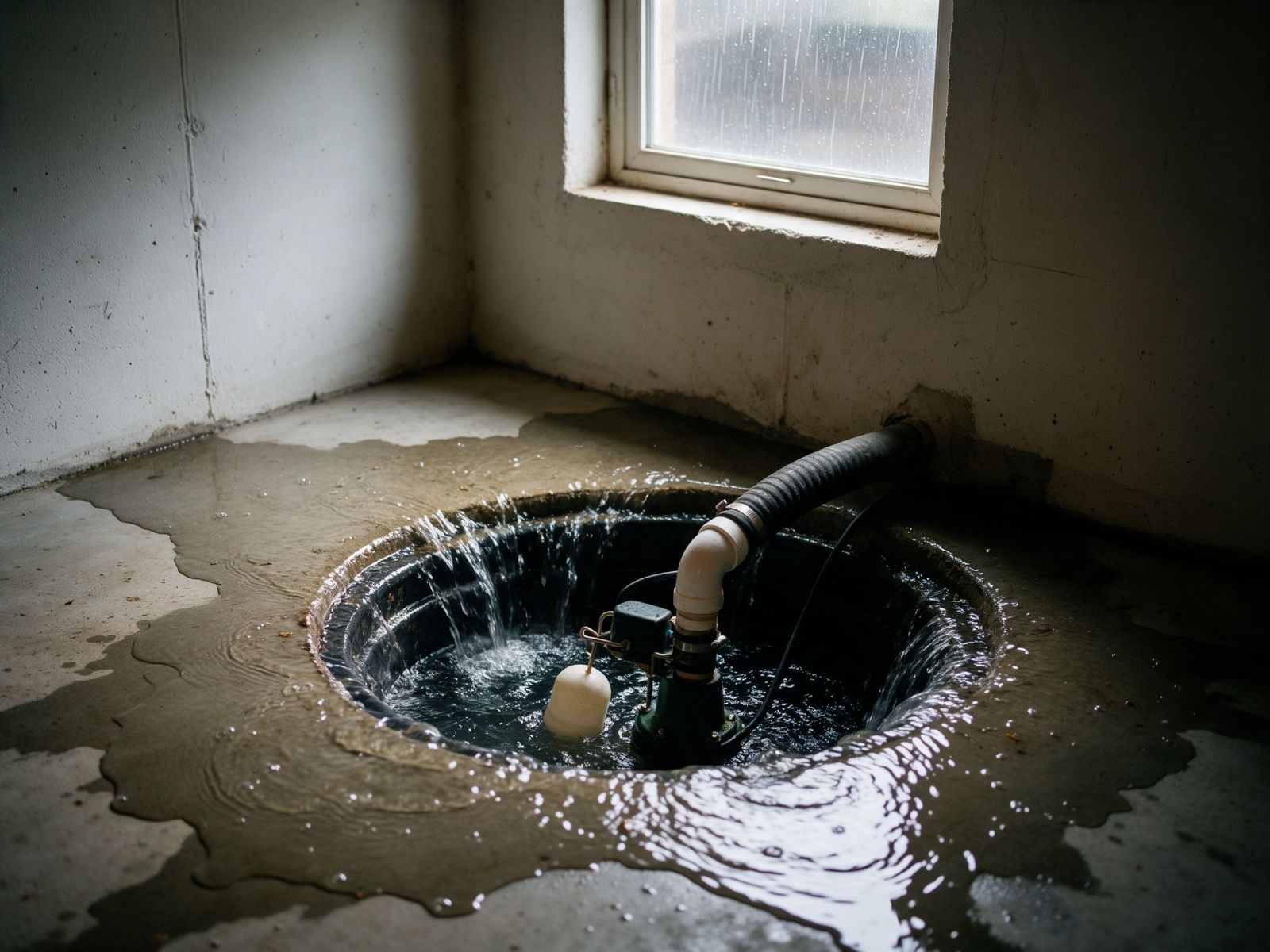
The storm is still going, the power flickered twice, and now there is a gurgling sound from the basement stairs. You look down and the sump pit is full to the rim, water is creeping across the slab, and the pump is silent. That is a sump pump failure. It almost never happens on a dry afternoon. It happens when the ground is saturated and the pump is needed most, which is why the water comes in fast and the basement fills before anyone can act.
Be careful before you go downstairs. Water on the floor can reach outlets, power bars, a furnace or a panel, so do not step into standing water unless you are certain the power to that area is off, and do not touch the pump or its cord. Switch off power to the basement only if the panel is dry and reachable from a dry spot. Lift anything valuable off the floor, photograph the pit and the water level, and call us. Do not try to run a shop vacuum in standing water.
There are four usual reasons a pump stops. A storm knocks out power and the pump has nothing to run on. The float switch sticks against the side of the pit or jams under debris, so the pump never turns on. The check valve fails, and water pumped up the discharge pipe falls back into the pit and cycles over and over. Or the pit simply overflows because the inflow is more than any pump can keep up with, even when it works. We tell you which you had from what the pit and valve show.
We do not replace pumps, and a plumber should. Our job is the water. Once the basement is safe to enter, we use submersible pumps and extractors to take the standing water off the slab, then lift it out of carpet, underlay and anything that was sitting on the floor. A truck-mounted unit is used on larger volumes. Getting the pit emptied and the floor cleared quickly stops the water from soaking into the baseboards, the lower drywall and the furniture legs.
After extraction comes the drying. Moisture meters and a thermal camera show how far the water has gone into walls, framing and flooring, and we map it room by room. Wet carpet and underlay usually come out, wet baseboard and the lower strip of drywall often need a flood cut at 2 feet, and insulation that has wicked water has to go. Air movers and low-grain dehumidifiers then run for several days, with readings logged each day until the materials reach dry standard.
Sump water is not always clean. It carries soil, and when a basement floods in a heavy storm, the water often mixes with ground water and sometimes with sewer back-up from combined lines. We treat that as contaminated water: porous materials that touched it are removed, not dried. If you smell sewage or see anything that looks like it came up a floor drain, tell us as soon as we arrive, because it changes what stays and what goes.
Prevention is straightforward and worth doing once the basement is dry. Test the pump by pouring a bucket of water into the pit every few months and watching the float rise and the pump shut off. Check that the float moves freely and the pit is clear of gravel and silt. Have your plumber look at the check valve, and consider a battery backup pump, which keeps the pit working when the power is out. Those checks take minutes compared with the work of drying a flooded basement.
The price depends on how much water came in, how long it sat, whether it is ground water or sewage-affected, how many square feet of flooring and wall were reached, what has to be removed, and how many days of drying equipment are needed. A pit that overflowed briefly onto bare concrete is a very different job from a fully finished basement under several inches of water. We explain the price on site before work starts.
Treat it as an emergency when the pit is overflowing, water is rising, power is out or the finished basement is already wet. Toronto has had two big flash floods, in August 2018 and July 2024, and each showed how quickly saturated ground and overwhelmed sewers can push water into basements, even in houses that had never flooded. The City of Toronto Basement Flooding Protection Subsidy Program covers things like sump pumps and backwater valves, so check its current rules with the City.
From our crew: Pour a bucket of water into the pit twice a year and watch the float rise and the pump kick off. If the discharge pipe sends water back down when the pump stops, the check valve is gone. Fix that before the next heavy rain.
For a failed sump pump or a flooded basement in Toronto or the GTA, call (226) 639-7972. Our phone is staffed through the night and on weekends. Call your plumber for the pump, and call us for the water, so extraction and drying begin before the basement finishes soaking it up. Our Water Extraction and Basement Flood Repair services cover the rest, and you can tell us on the call how deep the water is so the crew brings the right pumps.
Sump Pump Failure Services We Offer
✓Pit Overflow Extraction
Pumps and extractors remove water from the pit surround and slab so the basement can start drying.
✓Power Outage Flood Response
Extraction and drying after a storm outage stopped the pump and let the basement fill.
✓Float and Check Valve Failure Damage
Water removal and drying when a stuck float or failed check valve let the pit overflow.
✓Basement Drying After Pump Failure
Air movers and dehumidifiers dry floors, framing and walls, with readings logged until they reach dry standard.
How it works
- 1
Make it safe
We check for power hazards before we enter, then look at whether the water is ground water or has sewage in it, because that decides what can be dried and what comes out.
- 2
Pump it out
Submersible pumps empty the pit surround, and extractors lift water from the slab, the carpet and the underlay, so the floor stops feeding moisture into the walls.
- 3
Map and remove
The meter and thermal camera show how far the water went. Wet carpet, baseboard and low drywall come out where drying alone would not make them safe to keep.
- 4
Dry and document
Equipment runs for several days with readings logged each day, and your plumber replaces the pump so the basement is protected before the next storm arrives.
Pricing
Cost depends on how much water came in, whether it is ground water or contaminated, how much floor and wall were reached and how many days of drying equipment run. The price is explained on site before work starts.